
Nobody Is Paying You for Followers
Everyone assumes it comes down to follower count.
It doesn't. A brand isn't paying you for being popular. It's buying something specific, and once you know what that thing is, the whole process stops feeling random and starts feeling like a job you can get better at.
What is a brand actually buying?
Attention from people who might buy their product.
Not reach. Not even relevance in the abstract. Sales.
Every brand has a number it's trying to move, and a partnership is a bet that you can help move it. Nobody in that meeting is impressed by follower count as a concept. The question on the table is whether this gets them customers.
Which leads to the math nobody explains to creators: a brand would rather reach 2,000 of exactly the right people than 200,000 random ones.
That should change how you feel about your own page. A narrow audience isn't a weakness you have to grow out of. It's the product.
There's a second thing they're buying that catches people off guard — content they can use. Sometimes the post on your page matters less than the footage the brand gets to run in its own ads, on its site, in its email. You're not always renting out an audience. Sometimes you're a production crew they can afford.
The people who actually make this decision were at UCLA
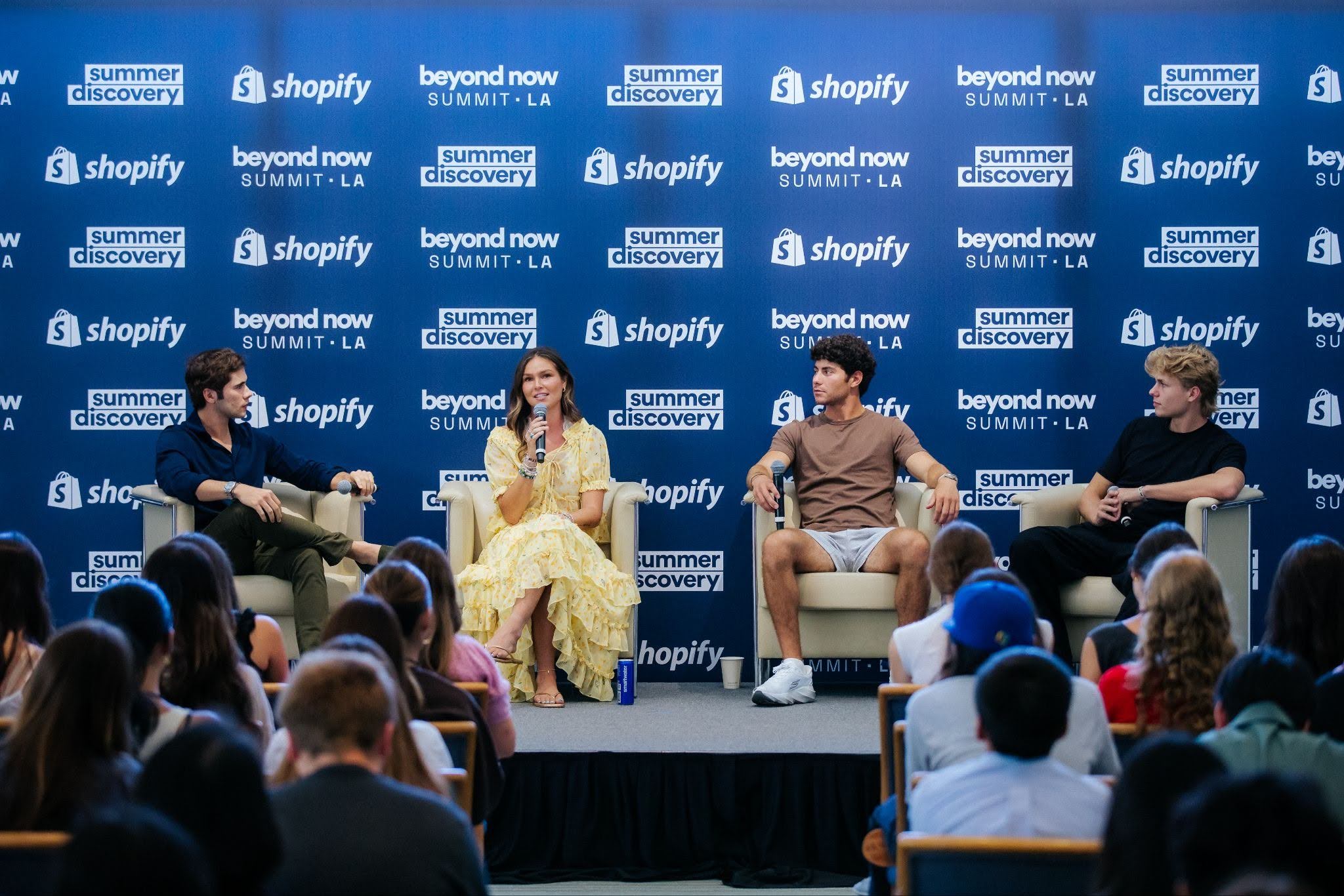
At Beyond Now Summit LA, both sides of this transaction were in the building at the same time, which almost never happens.
On the buy side: Kelly Salmieri, who ran the Clippers partnership that won NBA Team Partnership of the Year and now directs partnerships at the San Jose Sharks. Stephanie Paul, who does brand partnerships at Range Sports. Talia Solomon, formerly head of marketing strategy at Pizza Hut, and at Amazon and Bravo before that. These are the people on the other end of the email.
On the creator side: Connor Printz, who went from a Division III basketball roster and no audience to 1.7 million followers, and closed more than 90 brand deals by cold-emailing companies himself. Brandon Dwyer, who built 2.5 million followers documenting his attempt to score his first college basketball point — content made out of the thing he hadn't done yet, for an audience that could not be more specific.
The interesting part was how much the two sides agreed.
When asked what actually worked, almost nobody named a tactic. They named persistence and trial and error — posting through the long stretch where nothing lands, changing one variable, posting again, and being willing to be wrong in public for a while. Printz sent the emails until they worked. Dwyer made content out of failing at the same free throw.
And underneath all of it, the same priority, said in different words by people on opposite ends of the deal: build an audience that actually engages. Not a big one. An awake one.
What do they actually check?
Five things, roughly in this order.
Who your followers are. Age, location, interests. This gets looked at before the total does. A brand selling to high school athletes in Texas needs to know how much of your audience is high school athletes in Texas. That's the entire conversation, and most creators can't answer it.
Whether people actually engage. Comments from people who clearly watched the whole thing. Saves. Shares. Replies that aren't bots. Three thousand followers with a live comment section beats fifty thousand with silence underneath, and the difference is visible in about four seconds.
Whether you fit. Not whether you're good — whether the partnership makes sense to someone scrolling past it. A mismatch is obvious to everybody and wastes both of you.
Whether you're easy to work with. Do you reply. Do you hit the deadline. Do you follow the brief. More deals are lost here than on numbers. Brands talk to each other, and being reliable at sixteen is rare enough to function as a competitive advantage.
Whether you've done it before. Even one unpaid collab answers the question they're quietly asking, which is whether this will be a headache. One previous partnership changes how they read everything else on your profile.
Three of those five you can fix this week, and none of them involve growing your following.
Look at who's paying for this summit
Shopify is the presenting partner of Beyond Now.
Worth thinking about why. Six hundred high school students in one building for one day is small. Shopify could spend the same money on a single national spot and reach more people before the first commercial break — more eyeballs, better numbers on paper, easier to explain in a deck.
They bought the room instead. Because those six hundred students are specifically teenagers at the age where somebody decides to open a store, and there is no cheaper or more direct way to be standing there when they do.
Shopify's budget is not the constraint. Shopify's budget is enormous. That's the part worth sitting with, because the intuitive assumption is that a company with money buys the biggest thing available, and that is not how any of it works. Big budgets are exactly what let a brand be selective. They can afford to pay for precision instead of volume.
It's the same reason companies at that scale work with small creators constantly — not as charity, and not as a tryout before the real deal. A creator with four thousand followers who are all doing one specific thing is the only efficient way to reach those four thousand people.
Which is worth expanding, because "carve your own way" sounds like something you put on a poster until you look at how many ways there actually are.
The creator economy isn't five big categories with a few openings each. It's thousands of niches, and most of them sound invented right up until you find the brand that needs them.
Pick one at random: somebody who reviews seafood boils. Not seafood. Not cooking. Seafood boils specifically, with strong opinions and a rating system.
That reads like a joke until you count who's paying attention. The spice company whose seasoning is in the pot. The company that manufactures the pot. The frozen shrimp supplier trying to break into a new region. The grocery chain that stocks all three and needs a summer campaign.
One weirdly specific page. Four brands, four different reasons, four separate budgets, and not one of them competing with the others for the same thing.
That's the actual shape of this industry. There is no niche too small to be worth money — there are only niches nobody has bothered to own yet, and a sixteen-year-old with a phone and a strange specific obsession is the ideal person to own one.
Your page and Beyond Now are being evaluated the exact same way. The scale is different. The question isn't.
Why do small accounts win deals?
Because most of the money isn't at the top.
Plenty of companies have real budgets that still can't reach a major creator. Regional brands. New product lines. Businesses growing fast enough to need somebody but not fast enough to afford the obvious pick. They're looking right now.
A brand testing a new audience wants three things: affordable, specific, willing. Large accounts are none of those.
And there's an uncomfortable flip side for the people you're comparing yourself to — a huge general audience is harder to sell against than a small precise one. If nobody can describe who follows you in a single sentence, a brand doesn't know what it's buying.
What specific actually looks like:
Vague — a page about sports.
Specific — a page about strength training for high school offensive linemen, where nearly everyone following is a high school offensive lineman or plays next to one.
The first has to compete with every sports account in the country. The second isn't competing at all, because for a brand trying to reach that exact person, it's the only option on the board.
Stop trying to grow. Start trying to be obvious.
So what do you do with this?
Brands aren't looking for the biggest account. They're looking for the right one, and "right" is a description they have to be able to repeat internally to get the money approved.
So your job is knowing your own audience better than anyone else does. Open your analytics. Find out where your followers live, how old they are, and what they came to you for. Write it down as one sentence.
That sentence is your pitch. Printz sent a version of it ninety times.